
Survey to asses Iraqi pharmacists information about acetaminophen
Keywords:
Asaids, APAP, ADHD, NAPQI, COX.Abstract
Background: Paracetamol/acetaminophen is sold over-the-counter in both mono- and multi-component formulations. It is among the most popular and widely used analgesic and antipyretic medications in the world. Those who cannot be treated with non-steroidal anti-inflammatory (NSAID). Medicines are advised to use it. The purpose of the current study was to examine and appraise pharmacists in Iraq's knowledge of the most popular medicine, acetaminophen.
Method: By posting a Google form on social media, whatsapp, and telegram and sending the link to all the medical groups of pharmacists, the survey research's data was gathered on October 29, 2021. We asked the Iraqi pharmacists 16 questions, 12 of which were regarding their knowledge of acetaminophen. Four of the questions concerned the pharmacists' characteristics (age, gender, degree, and government). On February 1, 2022, the survey research came to an end
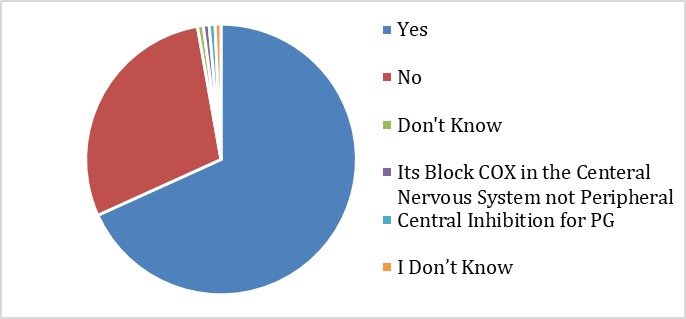
Results: The researches received 145 surveys from different Iraqi Governorates. Twenty to thirty years old make up 97%. 56.6 percent of respondents thought acetaminophen placed future fetuses at risk for ADHD, whereas 43.4 percent actually thought it did. 34.5 percent agreed that chronic acetaminophen usage by pregnant women is safe for the fetus, compared to 65.5 percent who disagreed. While 16.6 percent of respondents disagreed, 83.4 percent of respondents said acetaminophen was safe for expectant mothers.
Conclusion: Most pharmacists had not good information about mechanism of acetaminophen action, while they knew that Acetaminophen active metabolite (APAP) cause liver damage. The study had been showed that most pharmacist were aware about OTC medication .However, about one-third of them had inadequate knowledge of how acetaminophen affects the fetus and may result in ADHD in addition to other acetaminophen indications
References
Marta Jóźwiak-Bebenista et al. Acta Pol Pharm. (2014).Paracetamol: mechanism of action, applications and safety concern ,71(1):11-23.
Garry G Graham et al. Inflammopharmacology. 2013 Jun. The modern pharmacology of paracetamol: therapeutic actions, mechanism of action, metabolism, toxicity and recent pharmacological findings,21(3):201-32.
J A Forrest et al. ClinPharmacokinet. Mar-Apr 1982.Clinical pharmacokinetics of paracetamol, 7(2):93-107.
Allmers, H., Skudlik, C. & John, S.M. Acetaminophen use: A risk for asthma?. Curr Allergy Asthma Rep 9, 164–167 (2009).
Karen W, Carinda F, Rajan R. Lippincott Illustrated Reviews: Pharmacology Seventh Edition 2019.
EivindYstrom et al. Pediatrics. 2017 Nov. Prenatal Exposure to Acetaminophen and Risk of ADHD,140(5):e20163840.
C J McClain et al.CurrGastroenterolRep.Feb-Mar 1999.Acetaminophen hepatotoxicity:An update,1(1):42-9.
Wei-Xing Zhao et al. J Neuroinflammation. 2017.Acetaminophen attenuates lipopolysaccharide-induced cognitive impairment through antioxidant activity,14(1):17.
Kennon Heard et al. Curr Pharm Biotechnol. 2012 Aug. Acetylcysteine therapy for acetaminophen poisoning,13(10):1917-23.
Published
How to Cite
Issue
Section
Copyright (c) 2023 Authors

This work is licensed under a Creative Commons Attribution 4.0 International License.


