
Assessment of knowledge of people regarding antibiotic and its usage
Keywords:
Antibiotics, Awareness, Questionnaire., Antibiotics, Awareness, Questionnaire, Pandemic, Public Health.Abstract
Background: Antimicrobial resistance (AMR) is considered to be the next great pandemic and a serious global public health threat. The misuse of antibiotics, such as self prescription, short-course antibiotics and using antibiotics in a wrong way for viral infections is important for the development of resistance. Therefore, understanding the public perception of antibiotics is a critical component to the development of interventions to combat AMR.
Objectives: To determine the knowledge, attitudes and practices of [study population] in [setting] in relation to antibiotic use and antibiotic resistance.
Design: [Cross-sectional/questionnaire-based] study, with [number] participants who were randomly selected using [sampling method] from [month/year] to [month/year] was conducted. The data was obtained from a structured [pre-validated] questionnaire included in the data collection instrument, which included questions related to the demographic, knowledge of antibiotics and AMR, attitudes, and practices of self-medication and adherence to prescribed courses. All data were analysed using [software] and were subjected to [tests] and P value < 0.05 was considered significant.
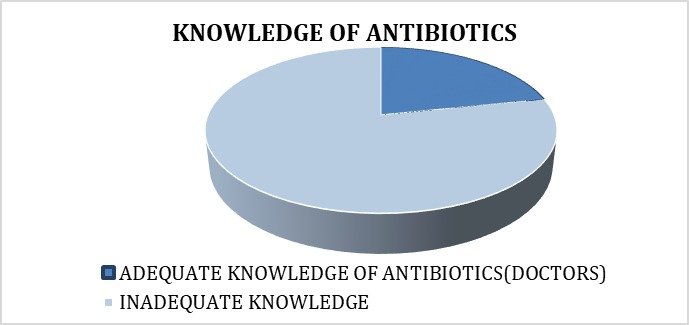
Results: [N] people participated, [X%] said that antibiotics are not effective in treating a viral infection, [Y%] said they heard about the phenomenon of antibiotic resistance. [Z%] self-medicated with antibiotics, and [W%] discontinued once they felt better. [educationlevel/age/occupation/etc.] was significantly related to higher knowledge scores.
Conclusion: The study indicates the participants were not aware of [the extent of the gap / moderate levels] and there were some unsafe practices in the usage of these antibiotics. Education campaigns focusing on rational antibiotic use, restricted access to antibiotics by dispensing them only in pharmacies and increased role of healthcare professionals in counseling are required to help contain AMR and promote rational antibiotic use.
References
Cambaco, O., Alonso Menendez, Y., Kinsman, J. et al. Community knowledge and practices regarding antibiotic use in rural Mozambique: where is the starting point for prevention of antibiotic resistance?. BMC Public Health 20, 1183 (2020). https://doi.org/10.1186/s12889-020-09243-x.
Ventola CL. The antibiotic resistance crisis: part 1: causes and threats. Pharm Ther 2015;40(4):277-83.
Gautam A. Antimicrobial Resistance: The Next Probable Pandemic. J Nepal Med Assoc 2022;60(246):225-228. doi: 10.31729/jnma.7174.
Delvin M. Antimicrobial resistance: the next pandemic? August 26, 2020. https://microbiologysociety.org/blog/antimicrobial-resistance-the-next-pandemic.html. last accessed 29.11.2023.
Taneja N, Sharma M. Antimicrobial resistance in the environment: The Indian scenario. Indian J Med Res. 2019 Feb;149(2):119-128. doi: 10.4103/ijmr.IJMR_331_18.
About Antimicrobial resistance. https://www.cdc.gov/drugresistance/about.html#:~:text=Antimicrobial%20resistance%2 0has%20the%20potential,most%20urgent%20public%20health%20problems.. Last accessed 30.11.2023.
Chand PP. Patient Knowledge and Perception about Antibiotics in Community Pharmacy. https://www.medrxiv.org/content/10.1101/2022.11.02.22281856v1.full. doi: https://doi.org/10.1101/2022.11.02.22281856. Last accessed 01/12/23.
Published
How to Cite
Issue
Section
Copyright (c) 2023 Authors

This work is licensed under a Creative Commons Attribution 4.0 International License.


