Improving access to quality healthcare and promoting a patient-centric approach for "women with disabilities" in Bangladesh: insights from a qualitative study
Keywords:
Disability, Patient-Centric Approach, Healthcare Access, Woman with Disabilities, Regional Barriers.Abstract
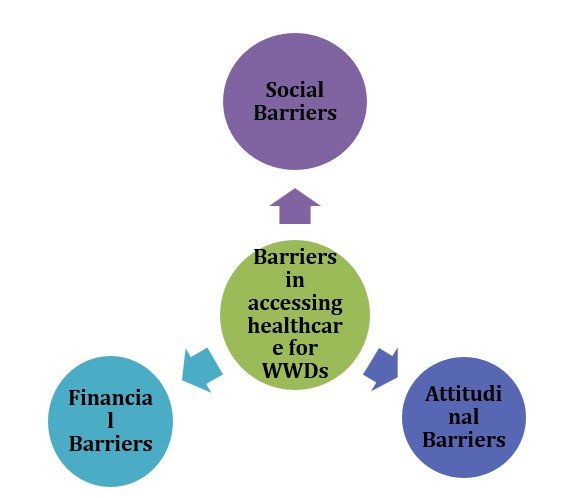
Healthcare services in Bangladesh remain non-inclusive despite policy initiatives, thereby compromising equity and the rights of Woman with disabilities (WWDs). This study explores the contextual barriers faced by WWDs in accessing quality healthcare in Bangladesh and advocates for a patient-centric approach to develop disability-friendly healthcare infrastructure. A qualitative research design was employed with a total of thirty in-depth interviews and a focus group discussion. Levesque’s framework was used which provided a systematic lens to consolidate the findings under a single theme related to structural, socio-economic, attitudinal, and regional barriers. This framework guided to gather recommendations from WWDs for building disability-friendly infrastructure. It also helped obtain suggestions that reflect a grounded understanding from their perspectives and lived experiences. The findings revealed two major themes: (1) Layered barriers to access and inclusion; and (2) Recommendations for disability-friendly healthcare infrastructure. Participants emphasized the importance of a patient-centric approach, involving them in accessible healthcare planning and systemic design by addressing existing barriers and adopting universal design principles. WWDs highlighted the need for disability-inclusive training for healthcare professionals and the provision of assistive services, which could revitalize healthcare spaces and make them more inclusive and accessible for people of all abilities. Healthcare reform is critical to ensure that PWDs can access inclusive and equitable care.
Published
How to Cite
Issue
Section
Copyright (c) 2026 Farheen Akter Bhuian

This work is licensed under a Creative Commons Attribution 4.0 International License.