Influence of Postharvest Handling and Packaging Technologies on Tomato Quality Among Smallholder Farmers in Kisii and Nyamira Counties, Kenya
Keywords:
Knowledge Level, Postharvest Technologies, Tomato Quality, KenyaAbstract
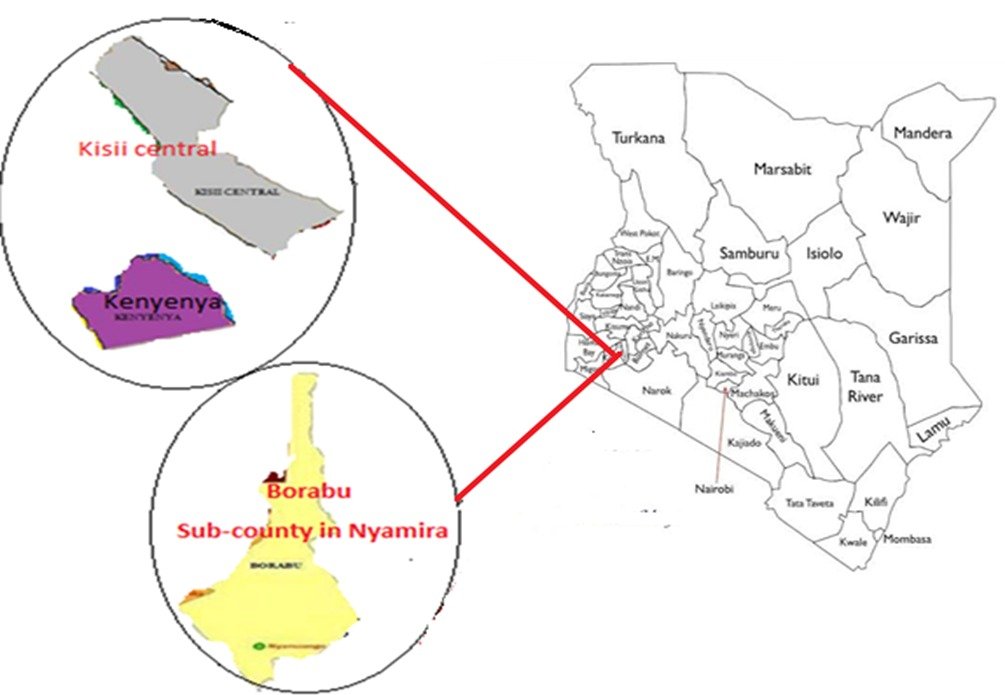
Tomato, Lycopersicon esculentum is a highly perishable horticultural crop, which requires high level of post-harvest management to prevent losses during harvesting, packaging and transport. The study aimed at assessing the influence of knowledge levels of postharvest handling technologies on tomato quality among smallholder farmers in of Kisii and Nyamira counties, Kenya. The study sampled 168 respondents from the target population of 1001 registered smallholder tomato farmers in the two counties using random and purposive multilevel sampling designs. Data was collected using semistructured questionnaires and interview schedules after determining the validity and reliability of the data collection tools. Descriptive statistics; mean, frequencies and percentages, and one-way ANOVA were performed using the Statistical package for social sciences (SPSS version 21, IBM Inc.) and the statistical significance of the differences of knowledge among the smallholder farmers levels judged at p = 0.05. There were significant differences (p < 0.05) in postharvest management knowledge levels among smallholder farmers. The overall mean (3.24 ± 0.822) indicated that smallholder farmers had moderate level of knowledge on tomato postharvest handling technologies. The means for packaging (3.49 ± 1.210) and transport (3.48 ±1.229), were significantly higher (p < 0.05) than other post-harvest technologies, with precooling (2.1±1.3) recording the lowest mean. Adoption of recommended post-harvest practices is determined by knowledge levels among the small holder farmers. Therefore, the study recommends the involvement of other advisory channels in training smallholder farmers to improve their awareness on postharvest handling technologies to reduce tomato quality deterioration.
Downloads
References
Babatola, L. A., Ojo, D. O. & Lawal, O. I. (2008). Effect of storage condition on tomato (Lycopersicon esculentum Mill.) quality and shelf life. Journal of Biological Sciences, 2: 490 - 493.
Beckles, D. M. (2012). Review: Factors affecting the postharvest soluble solids and sugar content of tomato (Solanum lycopersicum L.) fruit. Postharvest Biology and Technology, 63, 1, 129–140. Th Bryman,. A. (2012). Social Research Methods. 4 Edition- Oxford University.
Food and Agriculture Organization FAO (1998). Prevention of Postharvest losses; fruits, vegetables and root crops’’ FAO series N.17/2 Rome, 1998.
Food and Agriculture Organization [FAO](2008). Basic Harvest and Post-harvest Handling Considerations for Fresh Fruits and Vegetables. Postharvest Training on Food Processing/FAO manual food handling and preservation/CHAPTER 2. FAO, Rome.
Giovannoni, J. (2001). Molecular biology of fruit maturation and ripening. Ann. Rev. Plant Physiol. and Plant Mol. Biol., 52: 725–749.
Hurst, W. C. (2010). Harvest, Handling and Sanitation Commercial Tomato Production. Handbook B 1312. CAES Publications. University of Georgia. URL: http://www.caes.uga.edu/publications/pubDetail.cfm?pk_id=7470.
Idah, P. A., Ajisegiri E. S. A., & Yisa, M. O. (2007). Fruits and vegetables handling and transportation in Nigeria. Australian Journal of Technology, 10(3) 175 – 183. (http://creativecommons.org/licenses/by/4.0/) 46 Vol : 02 , No. 03 , April-May 2022
Kader, A., A., Rosa,. A. & S. Rolle, S. (2004) The role of post-harvest management in assuring the quality and safety of horticultural produce. Food and Agricultural organization of the United Nations. ISBN 92-5-105137-2. Rome.
Kader, A. A. (2005). Increasing food availability by reducing postharvest losses of fresh produce. Acta Horticulture (ISHS), 682, 2169–2176.
Kader, A. A. (2008). Perspective Flavor quality of fruits and vegetables. J. Sci. Food Agric. J. Sci. Food Agric., 88:1863-1868.
Kisii County Integrated Development Plan (2018-2022). Retrieved from www.kisii.go.ke. Accessed 20/03/2020.
Kitinoja, L. & Gorny, J. (2009)1. Storage Practices and Structures. Postharvest Technology for Fruit & Vegetable Produce Marketers. Chapter 7. Pp 1.1 – 20.6
Kitinoja, L. (2010). Identification of appropriate postharvest technologies for improving market access and incomes for small horticultural farmers in sub-Saharan Africa and south Asia. WFLO Grant Final Report, 323p.
Kun-Yang, H. (2016). Postharvest handling of tomato in Africa "Reduce postharvest losses to increase food availability in Africa" National Institute of Horticultural and Herbal Science, Rural Development Administration, Rep. of Korea, 1-210
Moneruzzaman, K. M., Hossain, A. B. M. S., Sani, W., Saifuddin, M., & Alenazi, M. (2009),Effect of harvesting and storage conditions on the postharvest quality of tomato (lycopersicon esculentum mill) cv. roma VF. Australian Journal of Crop Science, 3(2):113-121.
Mugenda, M. O. & Mugenda, A. (2003); Research methods: Qualitative and quantitative Approaches, Africa Center for technology studies (ACTS) Press, Nairobi, Kenya.
Mutari, A. & Debbie, R. (2011). The effects of postharvest handling and storage temperature on the quality and shelf of tomato. African Journal of Food Science, 5 (7), 446–452.
Muturi, S. N. (1999). Agroforestry Extension Manual. A survey of their use in Kenya. Page xiii National Agriculture and Livestock Extension Programme NALEP1 (2011). A guide to effective extension methods for different situations, Nairobi, Kenya. Pages 1-8.
Nyagwansa, R., Ochola, W., Odhiambo, J., Bunyatta, D. & Omweno, J.O. (2021). Effectiveness of Selected Advisory Channels on Safe Use of Pesticides among Small Holder Kale Farmers, A case of Kisii County, Kenya. East African Scholars Journal of Agriculture and Life Sciences, 4(6): 151-156. DOI: 10.36349/easjals.v04io6.003
Nyamira County Annual Development Plan. (2014-2015). Retrieved from www.devolution.go.ke. Accessed 29/09/2021.
Obayelu,. A. E., Ajayi,. O. D., Oluwalana, .E. O. A. & Ogunmola, O. O. (2017) What Does Literature Say About the Determinants of Adoption of Agricultural Technologies by Smallholder farmers? https://doi:10.19080/ARTOAJ.2017.06. Accessed 23/06/2020.
Ochola, W. A., Basweti, E. A., Ogendi, G. M., Onyango, C. A. , & Ochola, W. O. (2014).Relationship between Level of Participation of Researchers, Extension Agents and Farmers in On-Farm Research Trials and Adoption of Technologies Case Study: Maize and Beans Producers, Kenya. American-Eurasian Journal of Agricultural & (http://creativecommons.org/licenses/by/4.0/) 47 Vol : 02 , No. 03 , April-May 2022 Environmental Sciences, 14(11), 1141–1149. http://doi.org/10.5829/idosi.aejaes.2014.14.11.12437
Orzolek, M. D., Bogash, M. S., Harsh, M. R., Lynn, F., Kime, L. F., Jayson, K. &, Harper, J. K. (2006). Tomato Production. Agricultural Alternatives Pub. Code # UA291. Pp. 2-3.
Wills, R. H., Lee, T. H., Graham, D., Mcglassom, W. B. & Hall, E. G. (1981). An Introduction to the physiology and handling of fruits and vegetables. London, 432-438.
World Resources Institute [WRI] (1998). Disappearing Food: How big are Postharvest Losses? Earth Trends.
Yuan, Z. (2010). Smallholder Agriculture, Sustainability and the Syngenta Foundation. Syngenta Foundation for Sustainable Agriculture, P. 7. Doi: 10.1.1.187.3595.pdf. (http://creativecommons.org/licenses/by/4.0/) 48
Published
How to Cite
Issue
Section
Copyright (c) 2022 Authors

This work is licensed under a Creative Commons Attribution 4.0 International License.