Dietary multi-strain probiotic supplementation improves growth performance, intestinal morphology, serum biochemistry, and gut microbiome diversity in Ross 308 broiler chickens
Keywords:
Probiotics, Broiler Performance, Gut Microbiome, Intestinal Morphology, Feed Conversion Ratio, Antimicrobial Resistance.Abstract
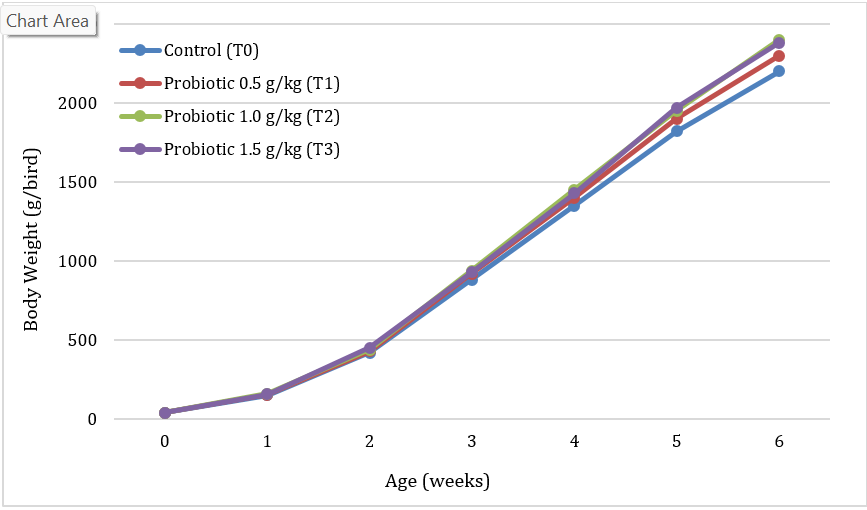
With the ban on antibiotic growth promoters (AGPs), the demand for alternative feed additives for commercial poultry production has increased. This study evaluated the effects of a multi-strain probiotic containing Lactobacillus acidophilus ATCC 4356, Lactobacillus reuteri DSM 17938, and Bifidobacterium longum ATCC 15707 on growth performance, intestinal morphology, serum biochemical indices, immune responses, and cecal microbial diversity in Ross 308 broiler chickens. In a 42-day feeding trial, 360 day-old male chicks were randomly allocated to four treatments: T0 (basal diet), T1 (basal diet + 0.5 g/kg probiotic), T2 (basal diet + 1.0 g/kg probiotic), and T3 (basal diet + 1.5 g/kg probiotic), with six replicates of 15 birds each. Birds in the T2 group exhibited significantly improved (p < 0.05) final body weight (2425 g vs. 2210 g), total body weight gain (2383 g vs. 2168 g), and feed conversion ratio (1.74 vs. 1.91) compared with the control group. Villus height and the villus height-to-crypt depth ratio increased by 20.4% and 45.3%, respectively, in T2 compared with T0 (p < 0.001). Probiotic supplementation significantly increased serum IgG concentration while decreasing total cholesterol, triglycerides, alanine aminotransferase (ALT), and aspartate aminotransferase (AST) levels (p < 0.05). Cecal microbiome analysis based on 16S rRNA gene sequencing revealed significant differences in alpha diversity indices (Shannon, Chao1, and Faith's phylogenetic diversity), with T2 showing a higher abundance of beneficial Lactobacillus spp. and a lower abundance of Clostridium perfringens. A dose-dependent response was observed up to 1.0 g/kg, whereas no additional benefits were detected at 1.5 g/kg supplementation. These findings indicate that supplementation with 1.0 g/kg of the multi-strain probiotic optimizes production efficiency, gut health, and immune function in commercial broilers and represents a promising alternative to AGPs.
Downloads
Published
How to Cite
Issue
Section
Copyright (c) 2026 Madhusmita Swain

This work is licensed under a Creative Commons Attribution 4.0 International License.