An economical sensor-based automated plant watering system for smart irrigation
Keywords:
Watering System, Arduino, Micro-Controller, Soil Moisture Sensor.Abstract
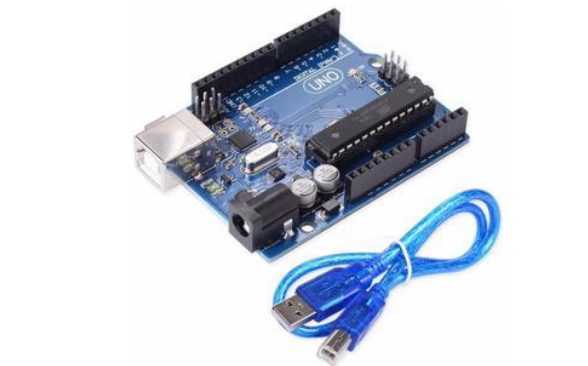
Lack of water reduces photosynthesis in plants and crops, and depletion of soil water lowers agricultural production and can reduce the food supply, making water supply and management essential for effective plant growth. Over the past century, global water use has grown faster than the population, and an increasing number of regions, particularly dry ones, now use more water than they can sustainably provide. Traditional watering techniques such as sprinklers and flood irrigation are inefficient and do not match plants’ actual needs, since many plants do not require excess water; this wastes water, and spillage and stagnant water can provide habitats for disease vectors such as mosquitoes. Watering should therefore be controlled intelligently, according to plants’ needs and the moisture content of the soil. In this study, an automated plant watering system that monitors soil moisture to determine when watering is necessary was developed using an Arduino Uno microcontroller, a soil moisture sensor, a pump, relays, wiring, and a sprinkler, together with software to drive the hardware. The economical system was tested and can be used in small gardens and, with scaling, in larger crop fields.
Published
How to Cite
Issue
Section
Copyright (c) 2024 Modupe Agagu

This work is licensed under a Creative Commons Attribution 4.0 International License.