
Analysing morphological productivity in the corporate lexicon: a linguistic approach to corporate terminologies
Keywords:
Morphology, Corporate Terminologies, Linguistic Innovation, Language Development, Communication Precise.Abstract
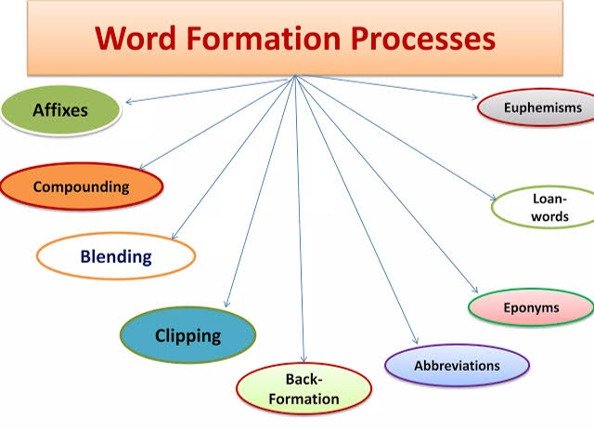
The rise in technology and science has deeply impacted not only the fields of industry and production but also has had a great impact on education, more specifically on language. When we steer around the impact of technology on language development, it has led to many linguistic innovations, which is the database for linguistic study. The present paper aims to do morphological analysis of the newly coined terminologies in the corporate sector. This paper analyses the morphological process through which these terminologies are created. The data for this study has been taken from internet, social media platforms, media and newspapers. The study has taken 50 terminologies as a database for this analysis. This study highlights the morphological process like compounding, blending, affixation, abbreviation, and acronyms used in the coinage of these terminologies. This paper is an attempt to contribute something meaningful to the field of linguistics, especially to morphology.
References
Park, "The Study of Language (3rd ed.) by George Yule. Cambridge: Cambridge University Press, 2006, x+273 pp.," Issues in Applied Linguistics, vol. 16, no. 2, 2008, doi.org/10.5070/l4162005099
Nnadi, O., et al. (2021). Register as a Language Variation: A Linguistics Study of Advertising, Scientific and Official Writing. Sumerianz Journal of Education, Linguistics and Literature, 4(3), 84-9. doi.org/10.47752/sjell.43.84.91
G. E. Booij, The Grammar of Words: An Introduction to Linguistic Morphology, 2nd ed. Oxford: Oxford University Press, 2007. doi.org/10.1093/acprof:oso/9780199226245.001.0001
L. Bauer, Introducing Linguistic Morphology. Edinburgh: Edinburgh University Press, 2003. doi.org/10.1515/9781474464284
M. Aronoff and K. A. Fudeman, What is Morphology? Fundamentals of Linguistics, 2nd ed. Chichester: Wiley-Blackwell, 2011. doi.org/10.1002/9781444391695
J. Baxi and B. Bhatt, Recent advancements in computational morphology: A comprehensive survey. 2024. doi.org/10.48550/arxiv.2406.05424
A. Wiemerslage, 'Morphological processing of low-resource languages: Where we are and what's next', in Findings of the Association for Computational Linguistics: ACL 2022, 2022, pp. 988-1007. doi.org/10.18653/v1/2022.findings-acl.80
O. E. Emama, 'The morphology and effect of SMS/social media habituation on the spelling patterns of some secondary students in Delta State', KIU Interdisciplinary Journal of Humanities and Social Sciences, vol. 4, no. 1, pp. 127-132, 2023. doi.org/10.59568/KIJHUS-2024-4-1-08
M. S. Zuhri, S. Suwandi, and S. Wuli Fitriati, 'Morphological process of morphemes through word-formation process in students' writing', Engl. Educ. J., vol. 12, no. 3, pp. 301-309, Sept. 2022. doi.org/10.15294/eej.v12i3.49676
L. Bauer, Morphological Productivity. Cambridge: Cambridge University Press,2001. doi.org/10.1017/CBO9780511486210
L. Bauer, Cambridge studies in linguistics: Morphological productivity series number 95. Cambridge, England: Cambridge University Press, 2009. doi.org/10.1017/CBO9780511486210
J. M. Anglin, G. A. Miller, and P. C. Wakefield, 'Vocabulary development: A morphological analysis', Monogr. Soc. Res. Child Dev., vol. 58, no. 10, p. i, 1993.doi.org/10.2307/1166112
R. Beard, Lexeme-Morpheme Base Morphology. Albany, NY: SUNY Press, 1995. doi.org/10.1017/s002222670001598x
E. G. Bard, D. Robertson, and A. Sorace, 'Magnitude estimation of linguistic acceptability', Language (Baltim.), vol. 72, no. 1, pp. 32-68, Mar. 1996. doi.org/10.2307/416793
G. Booij and J. Van Marle, 'Book notices', in Yearbook of Morphology, Dordrecht: Springer Netherlands, 1993, pp. 267-273. doi.org/10.1007/978-94-017-3712-8_9
G. Mccray, 'Morphological productivity of noun-forming suffixes in English at the level of word-formation rules', European Journal of Literature. doi.org/10.46827/ejlll.v6i3.415
A. Spencer and A. M. Zwicky, Eds, 'The handbook of morphology', in The Handbook of Morphology, Oxford, UK: Blackwell Publishing Ltd, 2001, pp. 283-305. doi.org/10.1111/b.9780631226949.2001.00017.x
J. Fernández-Domínguez, 'Morphological productivity measurement: Exploring qualitative versus quantitative approaches', Engl. Stud. (Amst.), vol. 94, no. 4, pp. 422-447, June 2013.doi.org/10.1080/0013838X.2013.780823
J. Thomas, 'Corporate jargon and language change: An analysis', Journal of Business Linguistics, vol. 12, no. 3, pp. 45-60, 2018. doi.org/10.1017/S004740451800003X
M. Aronoff and J. Rees-Miller, Eds, The handbook of linguistics. London, England: Blackwell, 2000. doi.org/10.1002/9780470756409
J. Zheng, S. Chen, T.-C. Tan, and B. Houlihan, Sport Policy in China. Routledge, 2018. doi.org/10.4324/9781315168234
M. Haspelmath and A. D. Sims, Understanding Morphology. London: Routledge. 2010. doi.org/10.4324/9780203776506
Published
How to Cite
Issue
Section
Copyright (c) 2026 Dr. Sherlin Smile

This work is licensed under a Creative Commons Attribution 4.0 International License.


