Understanding the biomechanics of musculoskeletal injuries in high-risk environmental conditions
Keywords:
Biomechanics, Environmental Conditions, Ergonomics, High-Risk Environments, Musculoskeletal Injuries, Injury Prevention.Abstract
Background: Musculoskeletal injuries in high-risk environmental conditions, come from a mix of biomechanical stressors that are still not fully mapped out across different tasks and kinds of equipment.
Objective: The aim was to look at how biomechanics links to musculoskeletal injuries in high-risk environments, by using and comparing multiple data sources and different methods.
Method: We used motion analysis, force sensor readings , computer simulations , and also biomechanical testing. Together these were used to tease out what drives musculoskeletal injury risk across various tasks and conditions, even when the setup changed.
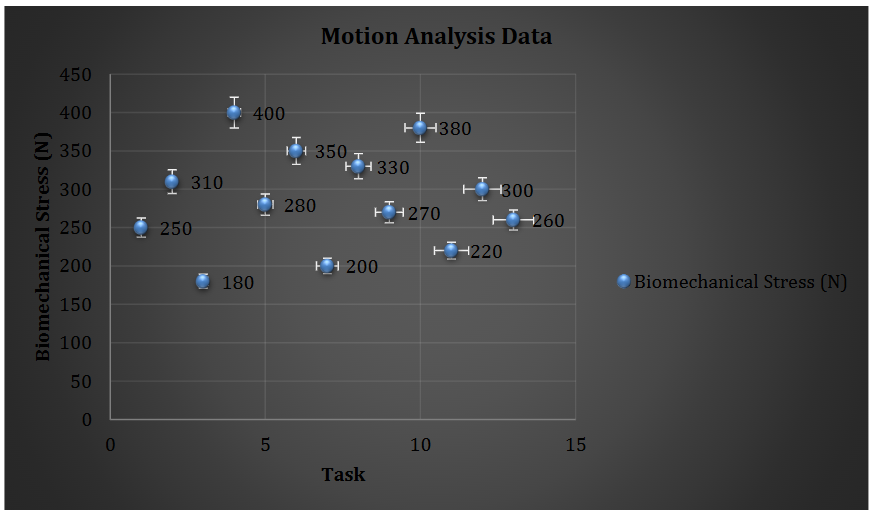
Result: The motion analysis, basically showed that the varus test added noticeably more biomechanical stress compared with the other tasks. That suggests a higher susceptibility to injury there. The force sensor information also pointed to the pressure mapping system as the one producing the largest force , which is a bit concerning since it could meaningfully contribute to injury risk. In the computer simulations the injury risk wasn’t uniform , it shifted by condition, and load carriage seemed to carry the highest risk overall. When we did biomechanical testing of joint stability, there were differences between tasks , with outliers that singled out a few specific tasks as especially noteworthy. Then, extra motion analysis on task variations including the sulcus sign and the valgus stress test, showed separate patterns tied to higher biomechanical stress.
Conclusion: Overall these findings add detail to the biomechanical side of musculoskeletal injuries in high-risk settings and they also point toward the need for focused interventions, better equipment design , and stronger safety measures , to reduce risk. This work also lays down a base for upcoming research and injury-prevention approaches, meant to help protect people who operate in demanding conditions.
Published
How to Cite
Issue
Section
Copyright (c) 2024 Collins Molua Ogom, Anthony Ossai Ukpene

This work is licensed under a Creative Commons Attribution 4.0 International License.