Study of the correlational relationship between endostatin and kidney function indicators and total proteins in Iraqi male patients with diabetic nephropathy
Keywords:
Diabetic Nephropathy, Correlation, Endostatin, Kidney Function, Glomerular Filtration Rate, Albumin, Globulin.Abstract
Background: Diabetic nephropathy is one of the major complications that can come with diabetes mellitus, and early markers that can help forecast kidney function decline are really needed so diagnosis, and management can get better. Endostatin, which is an endogenous inhibitor of angiogenesis, has been suggested as some possible marker for renal impairment.
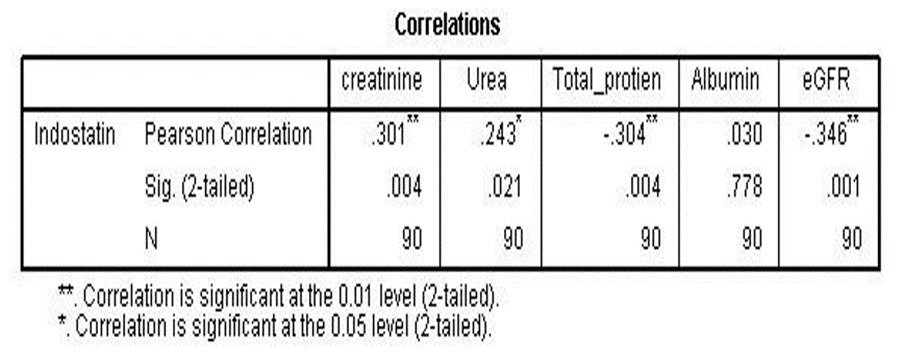
Objective: The goal was to look at how serum endostatin levels are related with kidney function indicators like urea, creatinine, total proteins and glomerular filtration rate (GFR) in male patients who have diabetic nephropathy, specifically in Kirkuk province.
Method: This case-control work included 100 male participants, 70 individuals were diagnosed with diabetic nephropathy, while 30 were healthy controls. Specimens were gathered from public and private hospitals, and clinics during the period from January 2024 to June 2024. Serum endostatin, urea, creatinine, total proteins, and GFR were measured. Then Pearson correlation coefficient analysis was used, to see the associations between endostatin and the other indicators.
Result: The study showed a statistically significant positive correlation (P ≤ 0.01) between endostatin levels and urea, creatinine, as well as total proteins. There was also a significant positive correlation (P ≤ 0.01) between endostatin and GFR, which may point to a possible connection between endostatin and the progression of renal impairment in diabetic nephropathy.
Conclusion: In male patients with diabetic nephropathy, endostatin appears to correlate significantly with important renal function markers, so it supports the idea that endostatin could act as a biomarker for detecting, and following kidney function deterioration in diabetic patients. Overall, these findings might help strengthen diagnostic, and therapeutic monitoring strategies for diabetic nephropathy.
Published
How to Cite
Issue
Section
Copyright (c) 2024 Rokan Hazim Hamad, Dr. Sahib Jummah Abdalrhman, Sadoon Mohammed Abdullah

This work is licensed under a Creative Commons Attribution 4.0 International License.