Monetary indicators and economic growth of SAARC countries
Keywords:
Monetary Indicators, Economic Growth, SAARC, Panel Data, Regression Analysis.Abstract
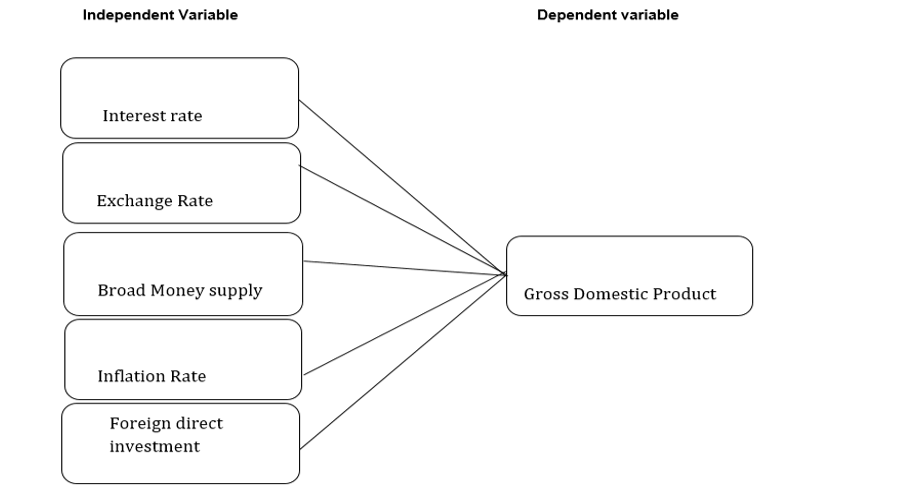
This research aims to analyze the relationship between key monetary indicators and the economic growth of SAARC countries. The specific objectives of the study were: establishing the relationship of inflation, exchange rate, broad money, interest rate and foreign direct investment on economic growth of selected SAARC countries. The nature of the study is descriptive and casual relationship research design. This research study is based on the secondary data collected from following authorized sources: World Bank and central bank for all the variables. The study employed Breushman Pagen test. This research comes to the conclusion that, despite the remarkable progress monetary indicators have achieved over the years, they are mostly ineffective in achieving their policy objectives because of shortcomings in the tools at their disposal and monetary indicators have a considerable influence on the economic growth of selected SAARC nations. The results suggest that while the SAARC nations have made substantial progress in financial inclusion, market liberalization and monetary management, monetary indicators have not fully achieved their intended policy objectives. This is largely due to weak institutional frameworks, limited autonomy and credibility of central banks, delayed or poorly coordinated policy responses and inconsistent or politically influenced fiscal-monetary alignment and so on.
Published
How to Cite
Issue
Section
Copyright (c) 2026 Santosh Kunwar

This work is licensed under a Creative Commons Attribution 4.0 International License.