A comprehensive analysis of agricultural and animal production in India for trends and growth (2020–21 to 2025–26)
Keywords:
Food Grain Production, Livestock, Fisheries, Horticulture, Agricultural Growth, Sustainable Agriculture.Abstract
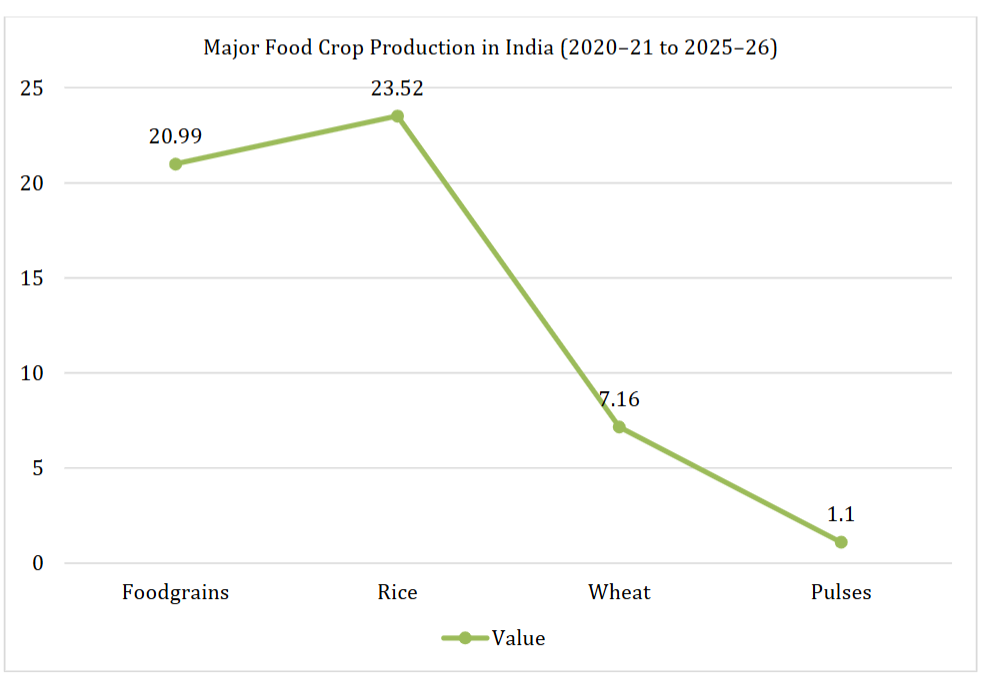
Agriculture and allied sectors continue to play a vital role in the Indian economy by ensuring food security, generating employment, supporting rural livelihoods, and contributing significantly to national economic development. This study examines the production trends of major agricultural crops and allied sectors in India during 2020–21 to 2025–26. The research adopts a descriptive quantitative approach based on secondary data collected from reliable government and international sources, including the Directorate of Economics and Statistics (DES), Ministry of Agriculture and Farmers Welfare, Department of Animal Husbandry and Dairying (DAHD), Department of Fisheries, Economic Survey of India, Food and Agriculture Organization (FAO), World Bank, and OECD–FAO Agricultural Outlook. The analysis covers major food crops, commercial crops, horticultural crops, and allied sectors such as livestock and fisheries. Statistical techniques including percentage, growth, trend, and comparative analyses were employed to evaluate production performance. The findings reveal a steady increase in agricultural output throughout the study period. Food grain production increased from 310.74 million tonnes in 2020–21 to an estimated 376.00 million tonnes in 2025–26. Similar growth was observed in rice, wheat, oilseeds, sugarcane, fruits, vegetables, milk, eggs, and fish production. Inland fisheries and poultry recorded particularly strong growth, highlighting the expanding role of allied sectors in agricultural diversification and rural income generation. The positive performance is attributed to improved irrigation, adoption of high-yielding varieties, technological advancements, supportive government policies, and increased investment in agricultural infrastructure. However, challenges such as climate change, water scarcity, rising input costs, post-harvest losses, and market uncertainties continue to affect sustainable agricultural development. The study concludes that strengthening climate-resilient farming practices, digital agriculture, research and innovation, value-chain infrastructure, and farmer-centric policy interventions will be essential for sustaining productivity, enhancing food security, promoting inclusive and sustainable growth, improving farmers' income, and supporting balanced agricultural development in India.
Downloads
Published
How to Cite
Issue
Section
Copyright (c) 2026 Dr. M. Dinesh Kumar

This work is licensed under a Creative Commons Attribution 4.0 International License.