Machine learning in modern world
Keywords:
Machine Learning, Artificial Intelligence, Technology, Deep Learning, ModelsAbstract
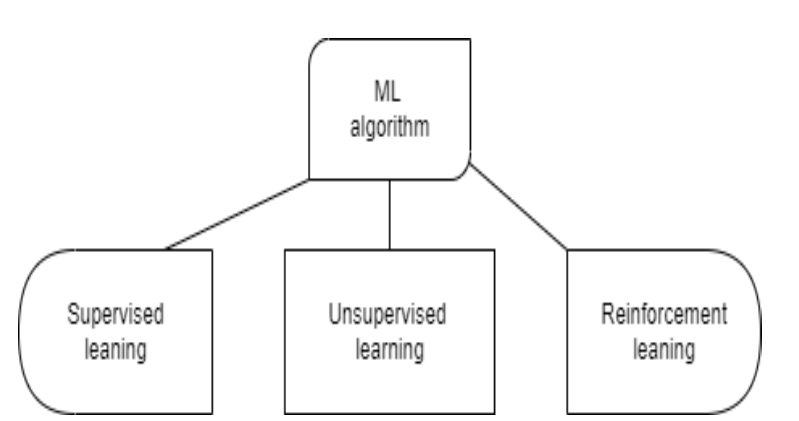
Today the world is totally dependent on technology. Machine learning is one of the game changing technologies which is used in our day to day life. Everyday in machine learning technology there are developed a variety of new products and applications using various machine learning algorithms. Mainly of three types of algorithm. A few applications of machine learning are Product recommendations, Speech recognition etc… The machine learning outcome of the product is perfectly excellent and more accurate. Machine learning is otherwise a subset of Artificial inteligence,it implements several tasks left out any changes. There are many more trending technologies depending on machine learning, in machine learning the process is more effective and quick and faster than human work efficiency. These trends are done by using huge amounts of biological data, medical data,algorithms and numerical models available today. It is also becoming very useful in the upcoming future generation.
References
L. Breiman, J. H. Friedman, R. A. Olshen, and C. J. Stone, Classification and regression trees. Monterey, CA: Wadsworth and Brooks/Cole Advanced Books and Software, 1984.
J. Macqueen, 'Some methods for classification and analysis of multivariate observations', in Proceedings of the fifth Berkeley symposium on mathematical statistics and probability 1, 1967, pp. 281-297.
E. M. Knorr, R. T. Ng, and V. Tucakov, 'Distance-based outliers: algorithms and applications. The VLDB', JournalThe International Journal on Very Large DataBases, vol. 8, no. 3-4, pp. 237-253, 2000. doi.org/10.1007/s007780050006
Published
How to Cite
Issue
Section
Copyright (c) 2023 Archana V

This work is licensed under a Creative Commons Attribution 4.0 International License.
Article history
- Received: 20 October 2022
- Revised: 01 January 2023
- Accepted: 07 January 2023
- Published: 23 February 2023