The effects of diet on the elimination and prevention of mental health illnesses
Keywords:
Pathological Anxiety Disorders, Diets, Mental Health Status, Omega-3 Fatty Acids, Mediterranean-Style Diet, Western-Type Diet.Abstract
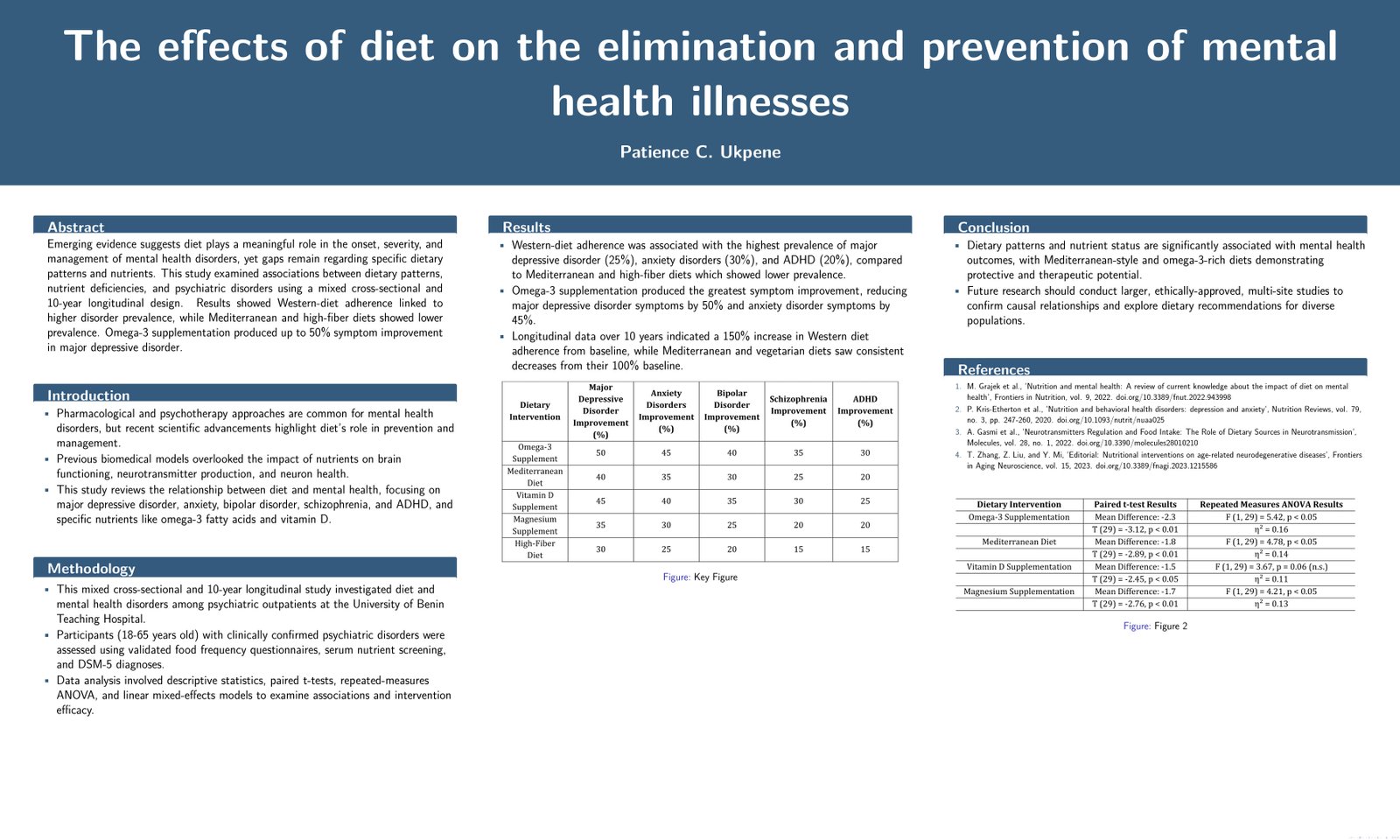
Background: Emerging evidence suggests diet plays a meaningful role in the onset, severity, and management of mental health disorders, including major depressive disorder, anxiety disorders, bipolar disorder, schizophrenia, and ADHD, yet gaps remain regarding which dietary patterns and nutrients matter most for specific populations and conditions. Objective: To examine associations between dietary patterns (Western, Mediterranean, vegetarian, low-carbohydrate, high-fiber), nutrient deficiencies (omega-3 fatty acids, vitamin D, magnesium, B-vitamins, zinc), and the prevalence, severity, and treatment response of major psychiatric disorders. Methods: A mixed cross-sectional and 10-year longitudinal study was conducted among psychiatric outpatients using a validated food frequency questionnaire, serum nutrient deficiency screening, DSM-5 clinical diagnosis, and dietary intervention trials (omega-3, Mediterranean diet, vitamin D, magnesium, high-fiber diet). Associations were analyzed using descriptive statistics, paired t-tests, repeated-measures ANOVA, and linear mixed-effects models. Results: Western-diet adherence was associated with the highest prevalence of major depressive disorder (25%), anxiety disorders (30%), and ADHD (20%), while Mediterranean and high-fiber diets showed the lowest prevalence across all disorders. Nutrient deficiencies, particularly vitamin D and magnesium, were common across all diagnostic groups. Omega-3 supplementation produced the greatest symptom improvement (up to 50% in major depressive disorder), followed by the Mediterranean diet, magnesium, and high-fiber diet (all p<0.05); vitamin D supplementation showed improvement that did not reach statistical significance (p=0.06). Longitudinal data indicated declining adherence to Mediterranean and vegetarian diets alongside rising Western-diet adoption over the study period. Conclusion: Dietary pattern and nutrient status are meaningfully associated with mental health outcomes, with Mediterranean-style and omega-3-rich diets showing protective and therapeutic potential. Incorporating nutritional screening and dietary intervention into psychiatric care may improve patient outcomes, though larger, ethically-approved, multi-site studies are needed to confirm causal relationships.
Published
How to Cite
Issue
Section
Copyright (c) 2024 Patience C. Ukpene

This work is licensed under a Creative Commons Attribution 4.0 International License.