Pharmacological management of type 2 diabetes mellitus and diabetic kidney disease: a multi-pillar cardiorenal-protective approach
Keywords:
Type 2 Diabetes Mellitus, Diabetic Kidney Disease, Pharmacology, SGLT2 Inhibitors, GLP-1 Receptor Agonists, Mineralocorticoid Receptor Antagonists.Abstract
Background: Type 2 diabetes mellitus (T2DM) is the most common cause of chronic kidney disease (CKD) all over the world, and diabetic kidney disease (DKD) is the single most common cause of end-stage kid disease (ESKD). Pharmacological treatment of T2DM primarily focused on glycemic control for the past 20 years, but monotherapy with glycaemic control has failed to halt progressive loss of nephrons as well as cardiovascular mortality in people with T2DM.
Objective: This narrative review summarises the pharmacology of the different classes of antihyperglycemic drugs and reviews the evidence for four cardinal strategies for the prevention, diagnosis and treatment of cardiorenal disease with T2DM: renin-angiotensin system (RAS) inhibitors, sodium-glucose cotransporter-2 (SGLT2) inhibitors, glucagon-like peptide-1 receptor agonists (GLP-1RA), and non-steroidal mineralocorticoid receptor antagonists (ns-MRA).
Methods: A structured narrative search was performed of the PubMed/MEDLINE and Cochrane Library databases and ClinicalTrials.gov for landmark RCTs, regulatory labelling and current or recent American Diabetes Association (ADA) and Kidney Disease: Improving Global Outcomes (KDIGO) guidance issued from 2008 to 2025.
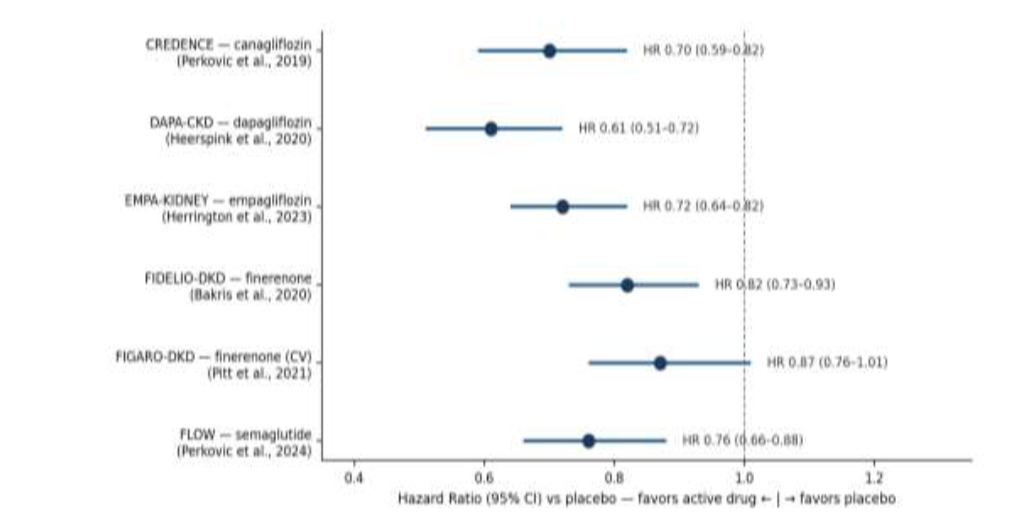
Results: More than 32,000 participants have been included in six landmark cardiorenal outcome trials that all showed hazard ratio reductions between 13% and 39% (hazard ratios of 0.61-0.87) with SGLT2 inhibitors, the non-steroidal mineralocorticoid receptor antagonist, and GLP-1 receptor agonist, with few of these benefits attributed to glycated hemoglobin levels. The mechanism of action - tubuloglomerular feedback restoration, natriuresis, and anti-fibrotic mineralocorticoid-receptor blockade - which accounts for the resulting clinical benefit, is presented with a comparative synthesis of ten classes of antihyperglycemic drugs and their pharmacodynamic, pharmacokinetic properties and adverse effects, including those of renal dosing.
Conclusions: This has changed from a diabetes-centric approach to a multi-pillar, organ-protective approach, where the use of SGLT2 inhibitors, GLP-1 receptor agonists and ns-MRAs is for independent cardiorenal benefits rather than just for glycemic control. Converting evidence into the prescription of drugs routinely, especially under resource-limited conditions, is still an untapped need for human disease prevention, diagnosis and management.
Published
How to Cite
Issue
Section
Copyright (c) 2025 Dr. Mosrur Ahmed

This work is licensed under a Creative Commons Attribution 4.0 International License.