Integrated strategies for prevention, early diagnosis, and management of human diseases
Keywords:
Disease Prevention, Early Diagnosis, Integrated Healthcare, Precision Medicine, Digital Health, Chronic Disease Management.Abstract
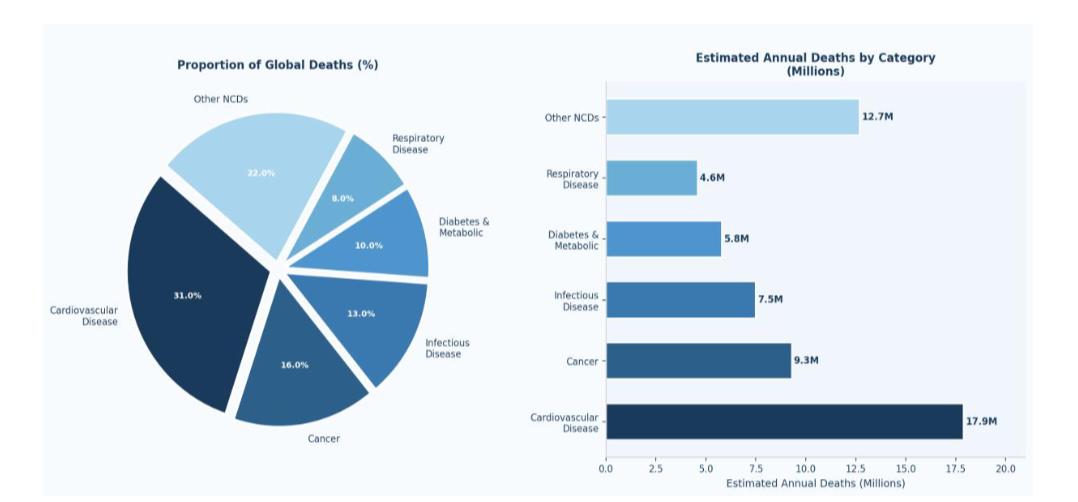
Background: Human morbidity and mortality have mostly been caused by non-communicable (primarily chronic) conditions such as cardiovascular disease, diabetes and cancer, as well as by infectious disease. The current unsustainable system of healthcare delivery has been found to be inadequate to deal with the multifactorial aspects of disease progression.
Methods: To integrate the existing knowledge and new approaches in the fields of preventive medicine, diagnostic technologies and therapeutic interventions, offering clinicians, researchers and public health practitioners a single, evidence-based approach to integrated human disease control. Methods: A systematic literature review was done in PubMed/MEDLINE, Scopus, EMBASE, Web of Science, and Cochrane Library (20002024). The literature covering prevention methods, diagnostic technologies and disease management systems were analysed according to the GRADE framework and PRISMA guidelines.
Findings: Lifestyle change and vaccination used as primary prevention measures lowered the rate of NCD by a 20-35. AI-based diagnostics had a sensitivity of 90-96 in the early diagnosis of the disease. CRISPR-based and liquid biopsy platforms were sensitive and specific (>95). Clinically meaningful results were achieved through digital health and telemedicine interventions in the outcomes of chronic diseases. Multidisciplinary care models led to lowering the hospital readmission rates by 23-31 percent. As high-income (54–91%) and low-income (2–38%) countries, there are still significant gaps in the level of technology adoption.
Conclusion: Prevention, precision diagnostics, multidisciplinary administration, and digital health platforms used to create an integrated care pathway are and will always be superior to siloed strategies. The fair application in a healthcare environment, backed by an effective health system infrastructure and global cooperation, is critical in realizing substantial decreases in the global illness load.
Published
How to Cite
Issue
Section
Copyright (c) 2026 Hoger Anwar Sadeeq

This work is licensed under a Creative Commons Attribution 4.0 International License.