Pharmacological management of atherosclerotic cardiovascular disease risk: a narrative of lipid-lowering pharmacotherapy and the LDL-cholesterol dose-response relationship
Keywords:
Atherosclerotic, Cardiovascular Disease, LDL Cholesterol Statins, PCSK9 Inhibitors, Bempedoic Acid, Lipid-Lowering Therapy.Abstract
Background: Atherosclerotic cardiovascular disease (ASCVD) remains the leading cause of mortality worldwide, with low-density lipoprotein cholesterol (LDL-C) established as a causal and dose-dependent contributor to atherosclerosis. Despite the availability of several lipid-lowering therapies beyond statins, a substantial gap persists between guideline-recommended LDL-C targets and their achievement in clinical practice.
Objective: To summarize current evidence on the efficacy, safety, and clinical utility of established and emerging lipid-lowering therapies and examine the relationship between LDL-C reduction, cardiovascular risk reduction, and the persistent treatment-target gap.
Methods: A narrative literature review was conducted using PubMed/MEDLINE, Scopus, and ClinicalTrials.gov for publications from January 2020 to mid-2025. Major clinical trials, prospective registries, systematic reviews, and meta-analyses were evaluated, with particular emphasis on lipid-lowering pharmacotherapy and the 2021 European Society of Cardiology prevention guideline. The evidence was qualitatively synthesized.
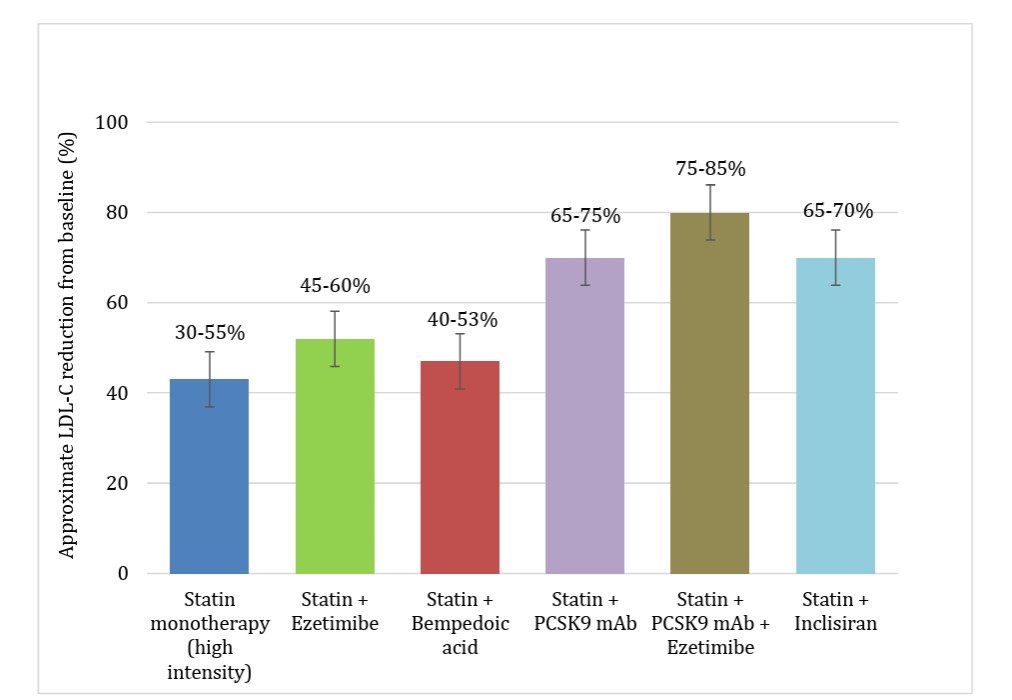
Result: Combination therapy with statins and ezetimibe, PCSK9-targeted monoclonal antibodies, or inclisiran provides additional LDL-C reductions of approximately 15–60% compared with statin therapy alone. Bempedoic acid reduced major adverse cardiovascular events by 13% among statin-intolerant patients. Large multinational registries, including DA VINCI and SANTORINI, reported that only 20–33% of high-risk patients achieved risk-stratified LDL-C targets. A meta-analysis of 60 randomized trials demonstrated an approximately 22% reduction in major cardiovascular events per 1.0 mmol/L reduction in LDL-C.
Conclusions: Statins remain the cornerstone of ASCVD prevention. Intensification with ezetimibe, PCSK9 inhibitors, bempedoic acid, and emerging RNA- and lipoprotein(a)-targeted therapies can improve LDL-C control and reduce cardiovascular risk.
Published
How to Cite
Issue
Section
Copyright (c) 2025 Dr. Makbul Hussain Choudhury

This work is licensed under a Creative Commons Attribution 4.0 International License.