Transformer-based anomaly detection in internet of things networks: a systematic review, meta-analysis, and proposed TIAD-Net architecture (2017–2025)
Keywords:
IoT, Anomaly Detection, Transformer, Time-Series, Deep Learning, Meta-Analysis.Abstract
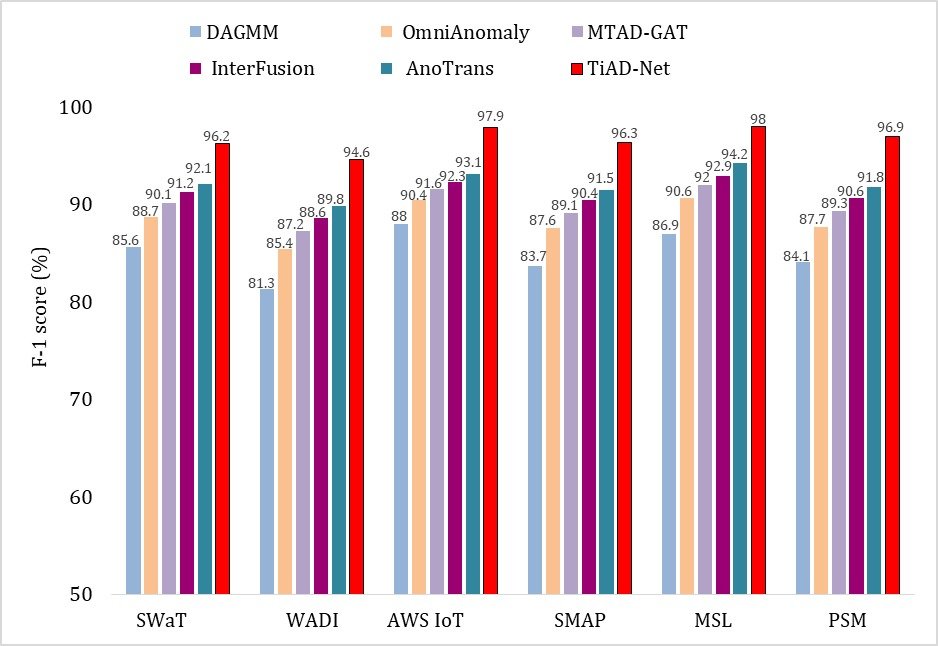
The rapid growth of Internet of Things (IoT) devices in areas such as healthcare, smart cities, transportation, and industrial automation has generated massive amounts of multivariate time-series data. Detecting anomalies in this data is essential for identifying cyber-attacks, device failures, and sensor malfunctions. Recently, deep learning techniques, especially Transformer-based models, have shown significant improvements in anomaly detection performance due to their ability to capture long-range temporal dependencies in complex datasets. This study presents a systematic review and meta-analysis of deep learning-based anomaly detection methods for IoT time-series data published between 2017 and 2025 using a PRISMA-compliant methodology. A total of 94 research papers were selected for qualitative analysis, while 71 studies were included in the quantitative meta-analysis. The risk of bias was evaluated using the Cochrane framework. The findings indicate that Transformer-based approaches outperform traditional LSTM Autoencoder methods with an average improvement of 6.3 F1-score points. Additionally, the proposed TiAD-Net model, which combines sparse self-attention with temporal convolution blocks, achieved high detection accuracy across benchmark datasets. The study also highlights major challenges including computational cost, limited labeled datasets, and edge-device deployment constraints, while identifying future research directions for IoT anomaly detection systems.
Published
How to Cite
Issue
Section
Copyright (c) 2025 Mr. Hiralal Bhaskar Solunke

This work is licensed under a Creative Commons Attribution 4.0 International License.